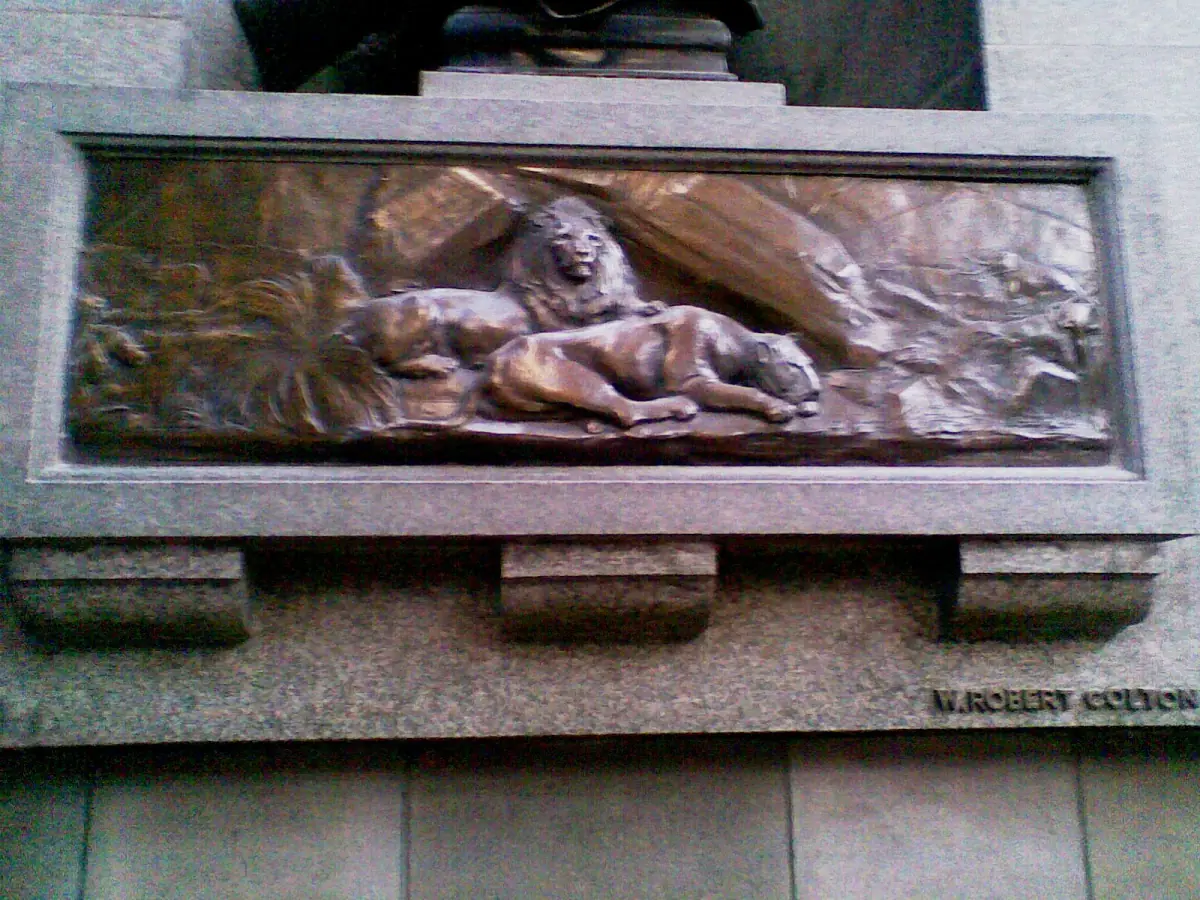
Frederick Courteney Selous at a glance
Frederick Courteney Selous was born in London on 31 December 1851. He lived in southern Africa as a hunter and ivory trader and worked for the British South Africa Company of Cecil Rhodes in Mashonaland. He died on 4 January 1917 in East Africa during the First World War. He is remembered through the reserve in Tanzania that carries his name, although he did not found it.
Anyone who plans a visit meets his name quickly. It stands on the game reserve, on the World Heritage listing and on many offers for a Selous safari. The man himself is less known than the name, and his biography needs more than one word. He was a writer and traveller, and he also hunted for a living and traded ivory.
Hunter, explorer and writer
What he did in southern Africa.
Selous made his name as a hunter and explorer in southern Africa. He earned his living from hunting and from the ivory trade, which is part of the picture, not a footnote. Later he worked for Rhodes's company in Mashonaland, the area that became part of colonial Rhodesia.
He also wrote about his travels. His three well-known books are A Hunter's Wanderings in Africa (1881), Travel and Adventure in South-East Africa (1893) and Sunshine and Storm in Rhodesia (1896).
Safaris near the Selous landscape
Day trips, boat safaris and overnight stays in the Rufiji area, with live prices and availability.
Selous and the colonial context
A life inside the empire.
Part of British expansion
His career ran alongside the expansion of British colonial rule in southern Africa. His work for the company of Cecil Rhodes ties him directly to it. A fair account names that role without turning him into a hero.
Ivory and hunting
He is sometimes called an early conservationist. That label sits next to a career built on hunting and the ivory trade, and it needs that context. The fate of elephants in the Selous itself is covered on the elephants page.
Elephants and poaching →The war in East Africa
In the First World War he served in the campaign in German East Africa. He fell there on 4 January 1917, in a fight at Kisaki, in what was then Tanganyika.
History of the reserve →How the reserve got his name
The name came after his death.
The reserve dates to 1922 and takes its name from Captain Selous, who died in the First World War. A later legal notice in 1974, GN 275, gave the area its formal status. The earlier history is older. German protected areas existed before the war, from 1896 or 1905. He was therefore not the founder of the reserve, and the name honours him.
Today the name sits on two different things. The Selous Game Reserve is a TAWA reserve of 18,020 square kilometres. The World Heritage property keeps the same name. The northern part became Nyerere National Park in 2019, which is why a trip that carries his name may lead to a different park. The page on Selous and Nyerere explains the difference.
His grave near Beho Beho
A quiet place in the former northern Selous.
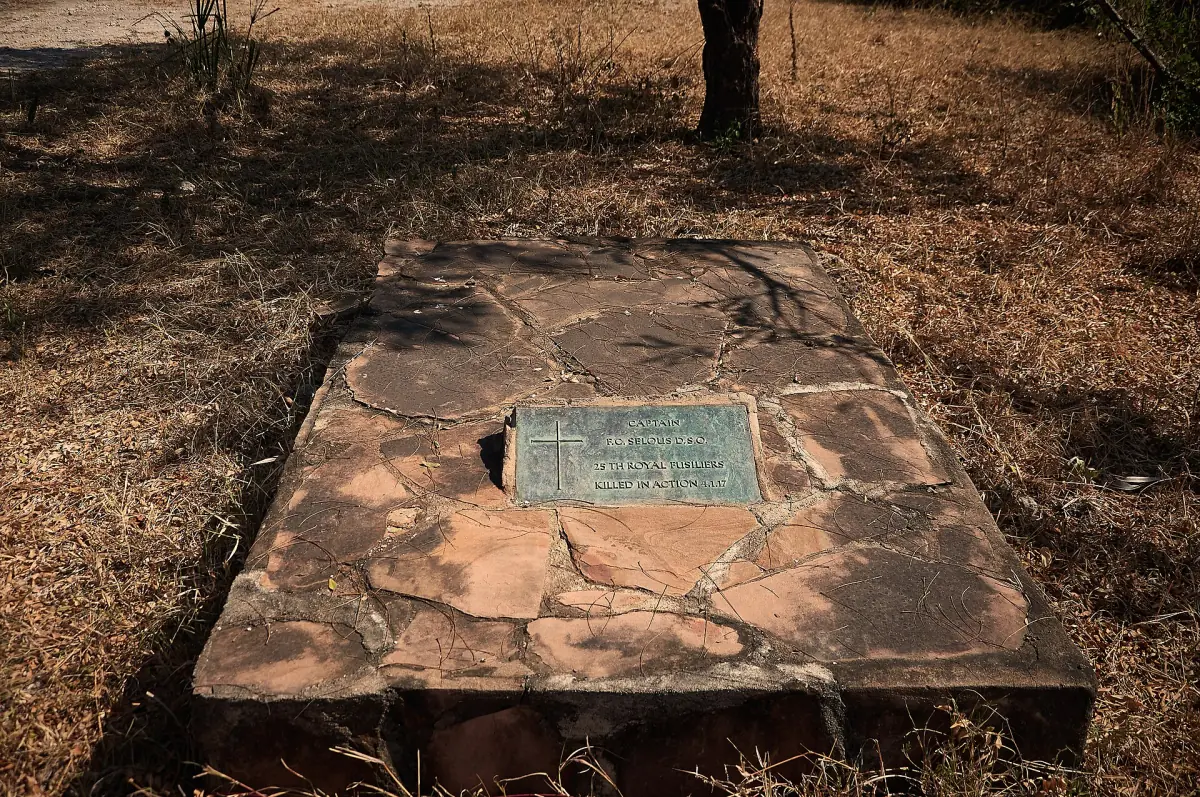
Selous is buried near Beho Beho, in the hilly north of the old reserve, which now lies in Nyerere National Park. The grave is about 3 miles from a camp near Beho Beho. It is a flat stone slab with a small plaque. The place of the fight, Kisaki, and the place of the grave, Beho Beho, are two different locations.
If a grave visit matters to you, ask the operator before you book whether it is part of the programme. Access depends on the camp and the guide. Our Beho Beho page describes the landscape. For the park around it, see the Nyerere National Park guide.
Selous in key dates
The life and the name side by side.
1851 to 1881
Born in London on 31 December 1851. His first book, A Hunter's Wanderings in Africa, appears in 1881.
1893 and 1896
Travel and Adventure in South-East Africa (1893) and Sunshine and Storm in Rhodesia (1896) follow, drawn from his years in southern Africa.
1917
He falls on 4 January 1917 in the campaign in German East Africa.
1922 and 1974
The reserve is dated to 1922 and named after him. It gets its legal status in 1974.
The World Heritage listing →Frederick Selous: frequently asked questions
Who was Frederick Selous?
A British hunter, explorer and ivory trader, born in London in 1851. He wrote three well known books and died in East Africa in 1917.
Did Selous found the Selous Game Reserve?
No. The reserve was named after him after his death. It dates to 1922, and earlier German protected areas existed before that.
Where is Selous buried?
Near Beho Beho, in the former northern Selous, now Nyerere National Park. The grave is about 3 miles from a camp near Beho Beho.
How did Selous die?
He fell in the First World War campaign in East Africa on 4 January 1917, in a fight at Kisaki.
Which books did Selous write?
Three well-known ones: A Hunter's Wanderings in Africa (1881), Travel and Adventure in South-East Africa (1893) and Sunshine and Storm in Rhodesia (1896).